Every December we set up in San Francisco rooms that have almost nothing in common: an Embarcadero restaurant, a brewery in the Bayview, an aquarium on the waterfront, a SoMa event complex, a hotel ballroom by the airport, a boat. The party inside each one is basically the same party. What changes is everything around it: when you can get in, where the power is, how much floor survives the dinner tables, and whether the room helps people mix or pins them to their seats.
This guide sorts San Francisco holiday party venues by type, using rooms where we have actually produced December parties, and gives you the questions that decide whether a room works before you sign for it. It is written for the person planning a company party, not for a venue's marketing department, so it includes the catches.
First, the two numbers that decide the room
Before looking at a single venue, get two things straight: how many people will actually show up, and whether the night is seated or standing. A seated dinner for 80 needs roughly twice the floor of a standing reception for 80, and it changes which entertainment works. Seated nights suit roaming formats that come to the table. Standing nights suit a station people drift toward between drinks.
Then ask how much of the night should be dinner. Most San Francisco company parties we work are three to four hours, and the best ones treat dinner as part of the evening rather than the whole of it. If the room can only hold tables, there is nowhere for the second half of the party to happen.
Restaurant buyouts and private dining rooms
Best for: 40 to 120 people who care most about food and a warm room.
This is the most common San Francisco holiday party format we see, and for good reason. The kitchen is already there, the room already looks like a place people want to be in December, and one contract covers food, drinks, and staff. We have produced holiday parties at Harborview Restaurant & Bar on the Embarcadero (most recently for a design firm in December 2025), at Che Fico, and at Palio for a law firm's party.
The catch: restaurants are built for tables, not for anything else. Once the room is set, the open floor is usually a corner by the bar or the entry. That corner is where entertainment has to live, so ask the restaurant to show you exactly where it is on a floor plan, and whether it is near a live outlet that is not on the same circuit as the espresso machine. Also ask whether a full buyout or a partial one: a partial buyout means you share the door and the noise with regular diners.
Breweries and urban wineries
Best for: casual teams, startups, and parties where people should move around.
Industrial spaces make relaxed parties. People stand, drift between the bar and the food, and talk to more colleagues than they would at an assigned seat. We have run holiday parties at Laughing Monk Brewing and Dogpatch WineWorks, and both are the kind of room where a party finds its own rhythm.
The catch: concrete and steel are loud, and they can be cold in December. Hard surfaces bounce sound, so speeches are harder to hear and anything that relies on audio suffers. Ask about heating, ask where a microphone would go, and ask whether food is catered in or comes from a partner, because the answer changes your budget.
Museums and attractions
Best for: 100 people and up who want the venue itself to be part of the night.
A museum or attraction does half of your entertainment for you. Guests walk around, look at things, and have something to talk about besides work. We have produced a holiday party at Aquarium of the Bay, a December party at Chabot Space & Science Center across the bay in Oakland, and events at the Exploratorium and the California Academy of Sciences.
The catch: these venues run public hours, so vendor load-in usually happens in a tight window after the last visitor leaves, and there are rules about what can go where and what can touch the exhibits. Build that into your timeline, and ask for the exact load-in time in writing. It is common for a museum party to start an hour after the doors close to the public, which leaves very little slack.
Event complexes and blank-canvas spaces
Best for: larger companies that want to build a whole world rather than rent one.
Big open spaces let you design the night from scratch: the layout, the lighting, the zones. We produced Adobe's holiday party at the Metreon, and have worked the SF Design Center and the YBCA galleries for other large events. These rooms are how a 300 person party avoids feeling like a conference.
The catch: blank canvas means you are producing everything. Tables, lighting, staging, sound, and decor are often rented separately, and those rentals add up fast. The room looks empty in the walkthrough because it is. Ask what is included, and get a production estimate before you compare this room against a restaurant that already has chairs.
Hotels
Best for: large headcounts, out-of-town staff, and anyone who wants one contract for everything.
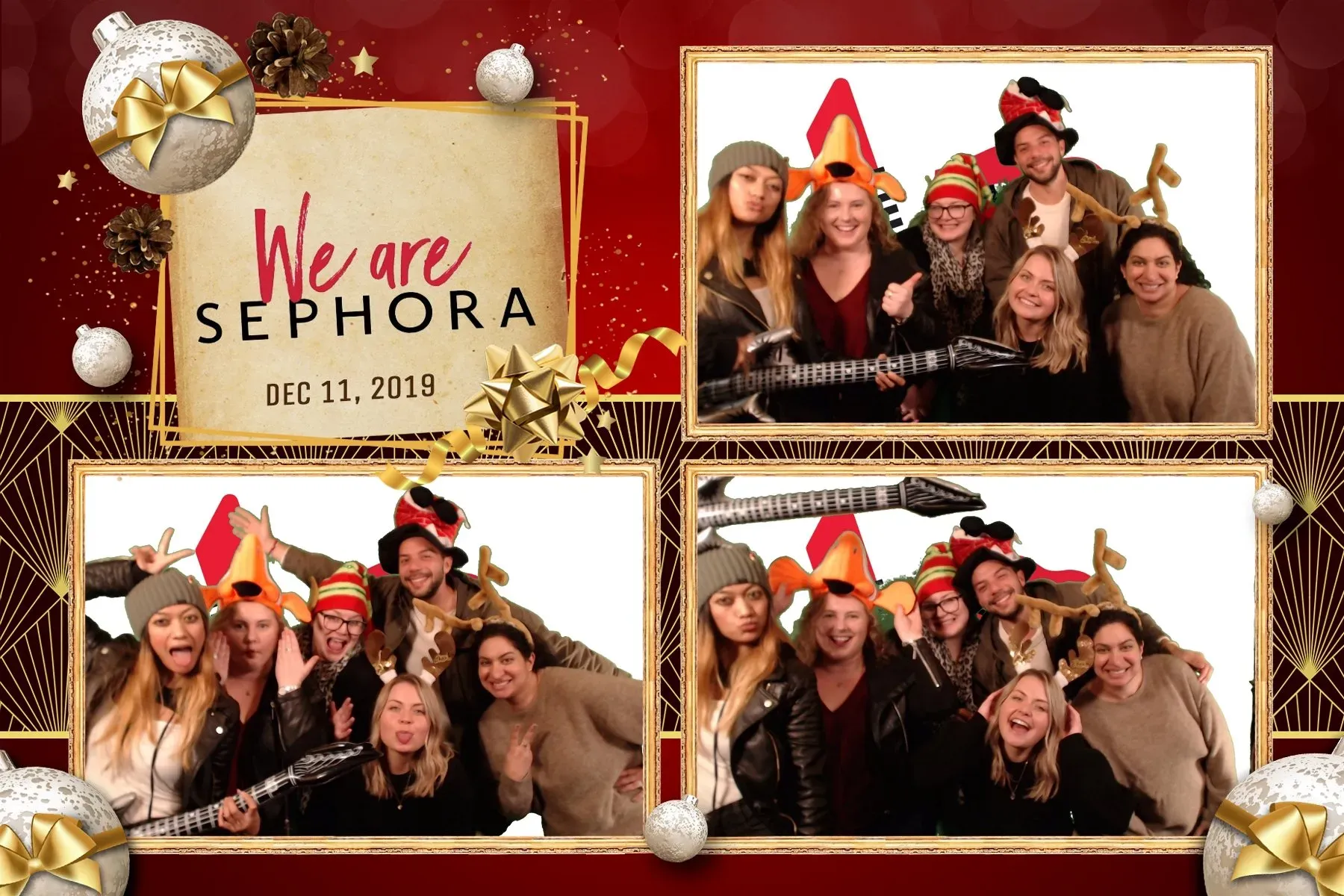
Hotels are the easiest large-party logistics there are. Catering, bars, coat check, restrooms, parking, and rooms for people who should not drive home are all under one roof. We have produced holiday parties at 1 Hotel San Francisco and at the Hyatt Regency San Francisco Airport in Burlingame, where one company's party ran three flipbook studios, three extra cutting stations, and three green screen photo setups at the same time.
The catch: hotels have rules. Many want a certificate of insurance from every vendor by a set date, some have preferred or exclusive audio visual partners, and some charge for power or vendor access. None of that is a problem if you ask early. It becomes a problem when it surfaces the week of the party.
On the water
Best for: a night people remember as different from every other work party.
A holiday cruise on the bay has a built-in view and a built-in end time, which some planners love. We produced a flipbook studio on a holiday cruise out of Pier 40.
The catch: boats run on a boarding schedule, and nothing waits for a late vendor or a late guest. Decks are narrow, power is limited, and a rough night on the water changes what is comfortable. Ask how much power is available and where, confirm the vendor boarding time, and assume the space will be tighter than the photos suggest.
Your own office or campus
Best for: strong turnout, low venue cost, and teams that are spread out the rest of the year.
An in-office party costs almost nothing for the room, and people actually come because they are already there. We have produced a holiday party at the Letterman Digital Arts Center in the Presidio, and plenty of companies across the Bay Area do the same in their own lobbies and cafes.
The catch: it feels like work unless you change it. The same fluorescent lighting and the same desks make it hard for people to switch off. This is the format where entertainment matters most, because it is the only thing that tells guests this is a party and not an extended stand-up meeting. Ask facilities about after-hours building access, freight elevator times, and security for vendors.
Outside the city
Plenty of San Francisco companies hold their party closer to where their people live or work. December rooms we have worked nearby include The GlassHouse, Club Sportiva, the Signia by Hilton, and the San Jose Marriott in the South Bay, and Chabot and Plank on the Oakland side. For the full list by region, see Bay Area venues we have worked. Travel is built into our quote anywhere in the Bay Area, so the venue choice never needs to be about the vendor.
Eight questions to ask before you sign
These are the questions that decide what fits in the room. A good venue coordinator will answer all of them in one email.
- When can vendors load in, and where? The dock or freight elevator and the exact time window.
- How much open floor is left once tables are set? Ask for the floor plan with tables drawn in.
- Which outlets are live near the open floor? Standard 110v is all we need, but it has to be within reach.
- What is the ceiling height? It matters for a 360 booth, whose arm sweeps overhead.
- Does the venue require a certificate of insurance, and by when? Get the exact wording they want on it.
- Is Wi-Fi available to vendors? We use venue Wi-Fi first for sending videos and photos to guests, and bring cellular backup.
- Is it a full or partial buyout? Partial buyouts share the room, the door, and the noise.
- Is there a hard end time or noise limit? It changes the run of show and when the bar closes.
The December timeline
The first two weekends of December are the most contested dates of the year in San Francisco, and the good rooms go first. If you are reading this in September or early October with no venue, move this week. If your date is flexible, a weeknight in early December is the smart booking: more rooms open, easier staffing, and usually a better rate from the venue.
Once the venue is locked, book entertainment six to eight weeks out, or earlier if you want custom creative such as a party-branded flipbook cover or a green screen scene built around your company's year. For ideas on what to put in the room, see our guides to holiday party entertainment, company holiday party ideas, and holiday party themes.
Already have a venue? Tell us the room, the date, and roughly how many people are coming. We will tell you what fits the space, how many stations your headcount needs, and one all-in number with travel included. If the room will not work for something, we will say so.
Bay Area Holiday Party Entertainment Check Your December Date
Frequently Asked Questions
For a Friday or Saturday on the first two weekends of December, the good rooms are largely committed by mid-October, and the most popular ones earlier than that. If your date is flexible, a Tuesday, Wednesday, or Thursday in early December stays open longer, is usually cheaper at the venue, and is easier to staff well. Lock the venue first, then book entertainment six to eight weeks out, earlier if you want custom creative.
It depends on headcount and what you want the night to feel like. Restaurant buyouts suit 40 to 120 people who want a great dinner. Breweries and urban wineries suit casual teams that want to move around. Museums and attractions bring their own atmosphere but have strict load-in rules. Hotels handle large headcounts with one contract. Your own office is the cheapest room and gets strong turnout, but it needs the most transformation to stop feeling like work.
Ask when vendors can load in and where the dock or freight elevator is, which outlets are live and near where entertainment will go, how much floor is left once tables are set, the ceiling height if you want a 360 booth, whether they need a certificate of insurance and by when, whether guest Wi-Fi is available to vendors, and whether there is a noise or end time. Those answers decide what fits in the room.
Usually, yes. Our setups run on standard 110v outlets. Optimal footprints are about 14 by 14 feet for a flipbook studio or 360 booth and about 10 by 10 for green screen photos, but those are comfortable working sizes rather than minimums, and we make smaller rooms work regularly. For genuinely tight rooms we can run an AI photo setup that needs no physical green screen.
Planning the whole night? Our holiday party rentals page has the full lineup and the December booking timeline, or check your date.
More from the Blog
What Disney, Google, and Netflix Know About Experiential Marketing
Read more →
Flipbook Photo Booth: The Ultimate Interactive Event Experience
Read more →
Why Smart Brands Turn Event Attendees Into Micro-Influencers
Read more →