We have been working corporate holiday parties for over 15 years. Hotel ballrooms in San Francisco, tech campuses in Silicon Valley, downtown Sacramento venues, restaurant buyouts, office lobbies with the desks pushed to the walls. We have watched hundreds of Decembers from the best seat in the house: the corner of the room where the entertainment is, where you can see exactly when a party comes alive and when it stalls.
So this is not a list scraped from other lists. These are the ideas we have watched work, organized so you can actually use them, with honest notes about when each one fits and when it does not. Some of these are things we provide. Most are not. The goal is a party your team still mentions in March.
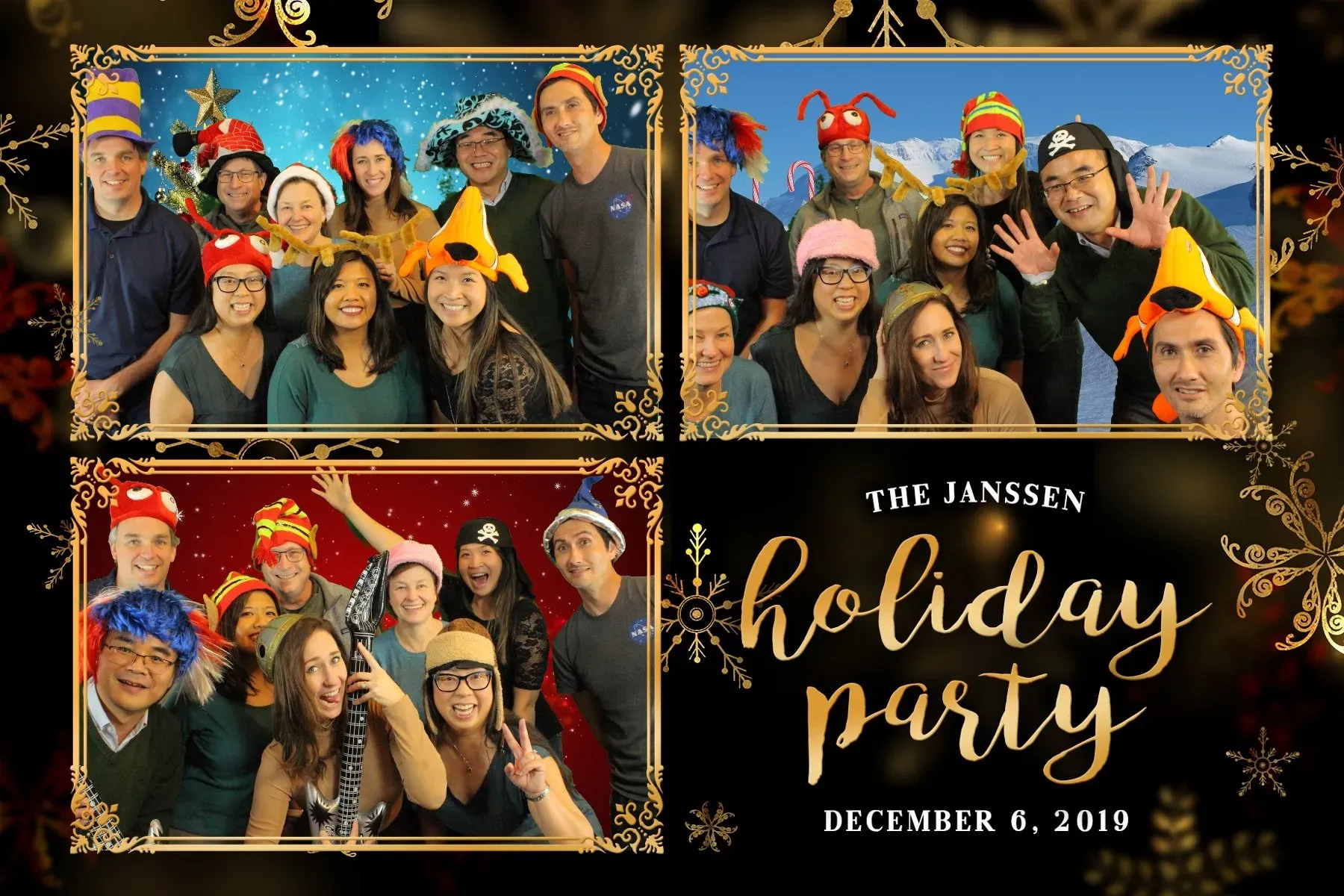
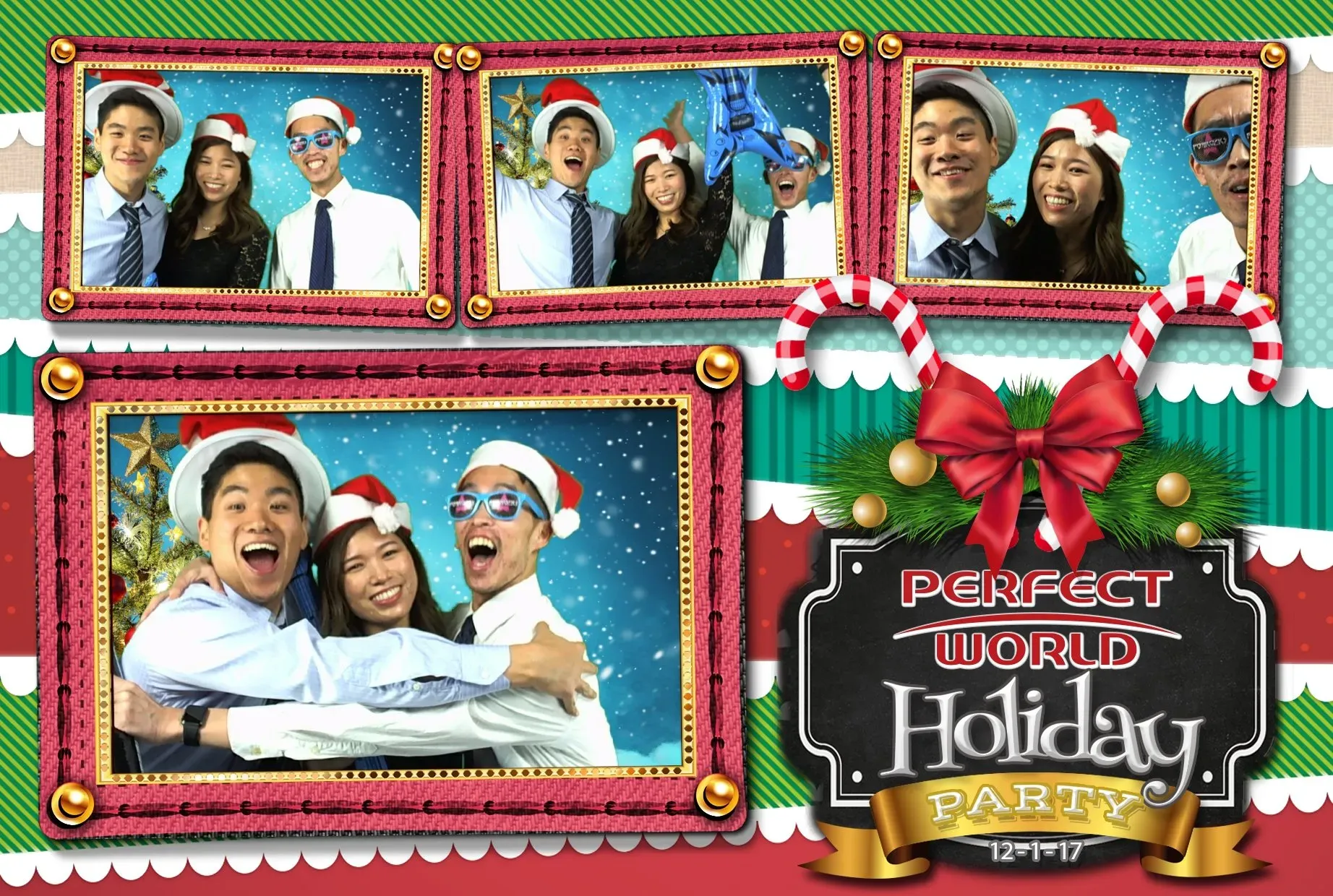
The short version: the company holiday parties people still talk about in January have a food anchor, one short shared moment, and something to do that is not drinking. The strongest ideas for that third piece are a flipbook photo booth, green screen video, a 360 booth, roaming photography, casino tables, and a well-run awards segment. Below are all 25 ideas we have watched work, plus low-budget and remote-friendly options, sorted so you can pick by party size.
Start with the structure, not the theme
Before picking ideas off a list, get the skeleton right. Every genuinely good holiday party we have worked has three things:
- A food anchor. Not necessarily expensive, but easy to get to and available the whole night. Long buffet lines at a fixed time kill momentum.
- One shared moment. An award, a toast, a reveal, a countdown. One peak the whole room experiences together. Just one, and short.
- Something to do that is not drinking. This is the one most parties miss. Guests who do not know each other well need an activity that gives them a reason to interact. That is where most of the ideas below come in.
Get those three right and almost any theme works. Miss them and no theme will save you.
Interactive entertainment ideas
These are the ideas that solve the "something to do" problem. The best ones run continuously all night, so guests participate whenever they want instead of being herded. (For the adult-party version of this list, including the games that survive an office party, see holiday party activities for adults.)
1. Flipbook photo booth. Guests act out a 7-second scene in front of a green screen and walk away about 90 seconds later with a printed animated flipbook of themselves. This is our signature product, so weigh our bias accordingly, but there is a reason it books out every December: it is the only party entertainment where every guest leaves with a physical keepsake. The books end up on desks in January, which is more than anyone can say about a cocktail. Here is how it works at holiday parties.
2. Green screen video activation. Guests star in a short branded mini-movie: dropped into a winter wonderland, a holiday film scene, or a custom world built around your company. Clips land on their phones in seconds and get shared the same night. Best for companies that want the party to generate content.
3. 360 photo booth. A rotating camera arm sweeps around up to four guests at a time and delivers a cinematic slow-motion clip to their phones. Groups cycle through about every minute, so it handles big crowds. It is the highest-energy option on this list and it photographs the party at its best. More on 360 booths.
4. Roaming event photography. A photographer moves through the party and every photo is delivered automatically to the right guest's phone. No line, no kiosk, no chasing people for a group shot. The right call for multi-room venues and parties where a stationary booth would miss most of the night. This is what SpotMyPhotos does.
5. Casino tables. Blackjack, craps, and roulette with funny money and a prize raffle for chips at the end. Reliable, social, and it gives non-dancers a home base for the whole evening. Book real dealers; the tables run themselves.
6. Caricature or portrait artists. Old school, still works. A two-artist setup keeps the wait reasonable at parties up to about 150 people. Guests keep the drawing, which passes the takeaway test.
7. Cocktail or mocktail building station. A bartender-led station where guests build a signature drink. It is an activity, a drink, and a conversation starter in one footprint.
8. Live song request board. Whether you hire a band or a DJ, put the request mechanism somewhere visible (a QR code on every table works). Participation in the music changes how a dance floor fills.
9. Trivia or game show segment. Fifteen minutes, teams by table, questions about the company year mixed with general holiday trivia. Works best at seated dinners. Keep it to one round; the fifth round is where these die.
10. Awards done right. Superlatives voted by the team ahead of time, presented fast, funny, and generous. Ten minutes total. This is usually the shared moment of the night if the CEO does not turn it into a quarterly review.
Office Christmas Party Ideas That Survive Contact With an Actual Office
An office christmas party has a constraint a venue party does not: the people attending see each other every Monday. That changes what works. The entertainment has to give the quiet people something to do that is not "mingle," it has to be equally comfortable for the intern and the VP, and it cannot require anyone to perform in front of their boss unless they choose to.
What consistently works in an office setting: an activity with a physical output people can put on a desk, a station that runs on standard power in a conference room or a lobby, and something a group can do together in under two minutes so nobody is stuck watching. What consistently dies: anything with a microphone and a captive audience, anything requiring teams to be picked, and any activity that leaves the least outgoing third of the room standing against a wall.
If your party is in the office itself rather than a venue, the practical questions are floor space, power, and connectivity. Our stations run on standard 110v outlets, so a conference room or an open floor works. For delivery we use the office Wi-Fi as a first choice, carry cellular hotspots as backup, and can arrange a dedicated data option where the network is locked down or unreliable. Optimal footprints are about 14x14 feet for a flipbook studio or a 360 booth and about 10x10 for green screen photos, though those are comfortable sizes rather than hard minimums and smaller rooms are usually workable.
Planning something like this? Send the date, the city, and roughly how many guests. We will come back with a configuration, the throughput math, and one all-in number with travel included. A real person answers, and there is no obligation.
Theme ideas that hold up
Six proven picks below, and if the theme is the decision you are stuck on, we wrote a full ranking in holiday party themes that actually work, including the four that never do.
11. Winter gala. The classic for a reason. White and silver, candlelight, a dress code people secretly enjoy. Works at every company size and nobody has to explain the theme.
12. Ugly sweater, elevated. The trick is production value around a silly premise: a proper sweater contest with categories, a photo activation with themed covers, prizes worth winning. Low-effort ugly sweater parties feel cheap; well-produced ones are some of the loosest, happiest parties we work.
13. Decades night. Pick one decade or let each department claim one. The music playlist writes itself and the costumes give strangers an opening line.
14. Casino royale. Combine the casino tables above with a dress code and you have a full theme that runs itself.
15. Around the world. Food stations by region, one signature drink per station. Good fit for international companies who want the theme to mean something.
16. Winter carnival. Game booths, prize wheels, food carts, string lights. The most flexible theme for mixed all-ages parties where employees bring families.
Food and drink ideas
17. Stations, not a buffet line. Three or four small stations spread around the room instead of one long line. This is as much a flow decision as a menu decision, and it is the single biggest fix for a party that clumps by the food.
18. Late-night comfort food. Sliders, fries, or hot pretzels at 9:30pm. The most reliably beloved catering decision in this entire guide.
19. Hot chocolate or coffee bar. Gives non-drinkers something festive to hold, which matters more for party feel than most planners realize.
20. Dessert moment. A short dessert reveal (flambe station, croquembouche, a ridiculous cake) can double as your shared moment at smaller parties.
Ideas by party size
21. Under 50 people: go deep, not wide. One great restaurant private room, one excellent activity, one meaningful toast. Small parties fail by spreading budget across too many things. A single well-run activation at a 40-person party gets 100 percent participation, something no big party achieves.
22. 50 to 150: one anchor activity plus music. This is the sweet spot for a flipbook station or 360 booth as the centerpiece, with a DJ. One activation at this size means everyone gets a turn without lines.
23. 150 to 500: two experiences minimum. One activation cannot serve 300 guests without lines. Pair two different experiences on opposite sides of the room (for example, flipbooks plus roaming photography) so the crowd circulates.
24. 500 plus: think in zones. Big parties work when the room is designed as neighborhoods: a dance zone, a casino zone, an activation zone, quiet seating. Guests self-sort and the party feels full everywhere instead of crowded in one spot.
25. Multi-office companies: same experience, every office. If headquarters gets a 360 booth and the satellite office gets a grocery store cake, people notice. Running the same activation across offices (we do this as multi-city runs every December) is a small logistics lift that buys real goodwill.
A note on Bay Area and Sacramento parties
Our two busiest December markets are the San Francisco Bay Area and Sacramento, and both have the same December problem: demand outruns supply. SF hotel ballrooms and Silicon Valley venues take holiday holds starting in late summer, and the good Sacramento venues downtown and in midtown are not far behind. If your party is in Northern California, the venue call in August or September is what makes every other decision easier. Vendors follow the same curve; by mid-October, December Fridays and Saturdays are mostly gone.
Low-budget company holiday party ideas
Not every company has a ballroom budget, and some of the best parties we have worked were small ones done with care. These ideas stretch a modest budget without looking like it:
- Move it to lunch or late afternoon. Weekday daytime is cheaper at almost every venue and caterer, and turnout is higher because nobody has to arrange a babysitter or a ride home.
- Hold it in the office and spend on one thing. Skip the decor budget and put the money into a single activity everyone remembers. The room matters less than what happens in it.
- Cater the main, crowdsource the desserts. A dessert table with a vote for the best one turns a cost saving into an activity.
- White elephant with a low cap. Cheap, funny, and it gives the whole room a shared moment without a microphone.
- A morning of volunteering, then lunch. Teams that give back together tend to talk about it more than any party. Pick something hands-on, not a check presentation.
A small budget spent on one memorable thing beats the same budget spread thin across five forgettable ones.
Ideas for remote and hybrid teams
Most companies now have people who will not be in the room. A video call projected on the wall of a party does not include them; it turns them into an audience. What works better:
- Bring people in when you can. For many teams the holiday party is the one night a year the whole company is together. It is often worth the travel budget.
- Fund local mini-parties. Where a few remote people live near each other, give them a dinner budget for the same night.
- Time the shared moment for everyone. If awards or a toast are streamed, schedule them for a time that works across time zones and keep them short.
- Share the night afterward. Photos and videos from the party, sent the next morning, let people who could not attend still see their colleagues having a good time.
What has changed for 2026
A few shifts we see from the corner of the room, year over year:
- Less open bar, more to do. Companies are putting less into the bar tab and more into experiences, partly because fewer guests drink and partly because an activity makes a better party.
- Mocktails are a real menu. A non-alcoholic signature drink is now standard at the parties we work, not an afterthought. Guests who do not drink notice when it is done well.
- Weeknight parties. More companies take a Tuesday to Thursday in early December for better venue availability and pricing.
- The party as content. Recruiting and internal comms teams now ask for the videos and photos afterward. A party that produces good footage of people enjoying their colleagues is worth something the rest of the year.
What to skip (learned the hard way)
- Long programs. Every minute of speeches past ten costs you dance floor energy you do not get back.
- Entertainment that interrupts. A 45-minute stage show stops the party and dares it to restart. Continuous, opt-in entertainment beats scheduled performances at almost every company party.
- Ignoring the first 45 minutes. The party's fate is decided while it is filling up. Have the music, food, and at least one activity running from minute one so early arrivers are not standing in a half-empty room.
- The photo wall with a phone on a tripod. If the takeaway is "we could have done this ourselves," it reads that way to guests too.
When to book what
- August: Venue locked, date announced to the team.
- September: Entertainment and catering booked. First-choice vendors still have December open.
- October: Creative details: themes, custom branding, signature drinks, award categories.
- November: Final headcount, run of show, and a one-page timeline for every vendor.
- December: Show up and enjoy it. The parties that feel effortless were planned in September.
Planning a holiday party in 2026?
If an interactive photo or video experience made your shortlist, that is what we do. Action Flipbooks has produced holiday party activations for Fortune 500 companies, startups, and everything in between for over 15 years, with the Bay Area and Sacramento as our home December markets and crews that travel nationwide. See what we bring to holiday parties and Christmas party photo booths, or check your date before the calendar fills.
Planning a December party in the Bay Area? Our Bay Area holiday party entertainment page covers the December date crunch, the rooms we have actually worked in the region, and Santa's Super Sleigh Ride. Still choosing a room? See our San Francisco holiday party venues guide.
Running a Santa photo event, a tree lighting, or a family holiday party? See how we run Santa photo events with instant delivery to every guest and on-site prints.
Frequently Asked Questions
Venues and popular vendors in major markets start booking out in September. If you want a December Friday or Saturday, lock the venue by early fall and book entertainment 6 to 8 weeks ahead at minimum. January planning for next year is not overkill for large companies.
The best holiday party entertainment runs continuously instead of interrupting the party. Photo and video activations, casino tables, roaming performers, and interactive food stations let guests participate on their own schedule. A single staged performance that stops the room works only if it is short and genuinely good.
Three things: good food that is easy to get to, one shared moment that gives the night a peak, and at least one thing to do that is not drinking or small talk. Most forgettable parties fail the third one.
Move the party to a weekday lunch or late afternoon, when venues and caterers are cheaper and turnout is higher. Hold it in the office and spend the savings on one good activity instead of decor. Cater the main course and let teams bring desserts, run a white elephant exchange with a small cap, or spend a morning volunteering together and follow it with lunch. A small budget spent on one thing people remember beats the same budget spread thin across five.
Give remote staff a real choice instead of a video call they have to watch from the outside. Fly or bus in whoever can come, fund small local get-togethers on the same night for clusters of remote people, and schedule the party's shared moment (awards, a toast) at a time that works across time zones. Share photos and videos from the night afterward so people who could not attend still see it.
For a company, holiday party is the safer name because not everyone on the team celebrates Christmas, and nothing about the format changes. Everything in this guide works the same for a work Christmas party. If your team does want a Christmas theme, lean into it through the decor, the music, and the photo scenes rather than the invitation wording.
More from the Blog

What Disney, Google, and Netflix Know About Experiential Marketing
Read more →
Flipbook Photo Booth: The Ultimate Interactive Event Experience
Read more →
Why Smart Brands Turn Event Attendees Into Micro-Influencers
Read more →