Most holiday party budgets are set the wrong way around. Someone picks a total in September, the venue and food eat most of it, and entertainment gets whatever is left in December. The night then feels like a nice dinner that happens to have a lot of people at it.
This is the method we have watched work for planners at 50, 100 and 250 people. It starts with what you want the party to do, then lets the numbers follow.
Step 1: decide what the party is for
Three answers cover almost every company party, and each one moves money to a different place.
- Thank the team. Food, drink and a good room carry the night. Entertainment is a bonus.
- Mix people who do not usually talk. Spend more on things that put different departments in the same frame: activities, a photo experience, a short program.
- Impress clients or partners. Spend on the room and on a few memorable moments guests will mention on Monday.
Step 2: work from a per-head number, not a total
Ask finance for a per-head figure and multiply by the confirmed headcount. A total divided across a guest list that keeps growing is how a 100-person party ends up under-funded at 130. Build the plan on the per-head number, then add a contingency line of about 10 percent of the total.
Step 3: the split most parties land on
These are planning ratios, not rules. Your venue may include food, your company may skip the open bar, and some companies give a half day off instead of spending on entertainment.
- Venue and rentals: roughly a quarter to a third.
- Food and drink: the largest line, often 40 to 50 percent. Bar choices swing this more than anything else.
- Entertainment and activities: about 10 to 20 percent. Parties that put this near the top of the range tend to be the ones people talk about.
- Decor, signage, staffing, tips: the remainder, plus the contingency.
What changes at 50, 100 and 250 guests
At 50 guests the room is the main variable. A private room or a restaurant buyout can feel more generous than a ballroom that is half empty. One strong activity is enough; you do not need three. A single flipbook studio or a green screen station can keep a group this size busy for the whole evening. See our guide to holiday entertainment for small teams.
At 100 guests flow starts to matter as much as cost. Decide where people arrive, eat, mingle and leave, then check that no single station creates a line. This is the size where throughput numbers matter. A flipbook station running a single cutter makes up to 70 books an hour, and a parallel cutting station takes that up to 120, so one station handles a 100-person party across a few hours without a queue.
At 250 guests you are producing an event, not hosting a dinner. Staffing, load-in time, power, and a clear run of show become line items. Budget for a second activity so guests can choose, and for a dedicated person on your side who owns the schedule.
The line items that quietly run over
- Bar. Open bar totals depend on the length of the party and the mix. Ask for a consumption cap before you sign.
- Service charges and taxes. Many quotes list food and beverage before service charge and tax. Ask for the all-in number every time.
- Late additions to the guest list. Plus-ones, remote employees who decide to fly in, and a client or two. Build the contingency for this.
- Parking, coat check, security and overtime. Small each, noticeable together.
- Setup and teardown time. A venue that charges for extra hours before and after can add up faster than the party itself.
Where a modest spend changes how the night feels
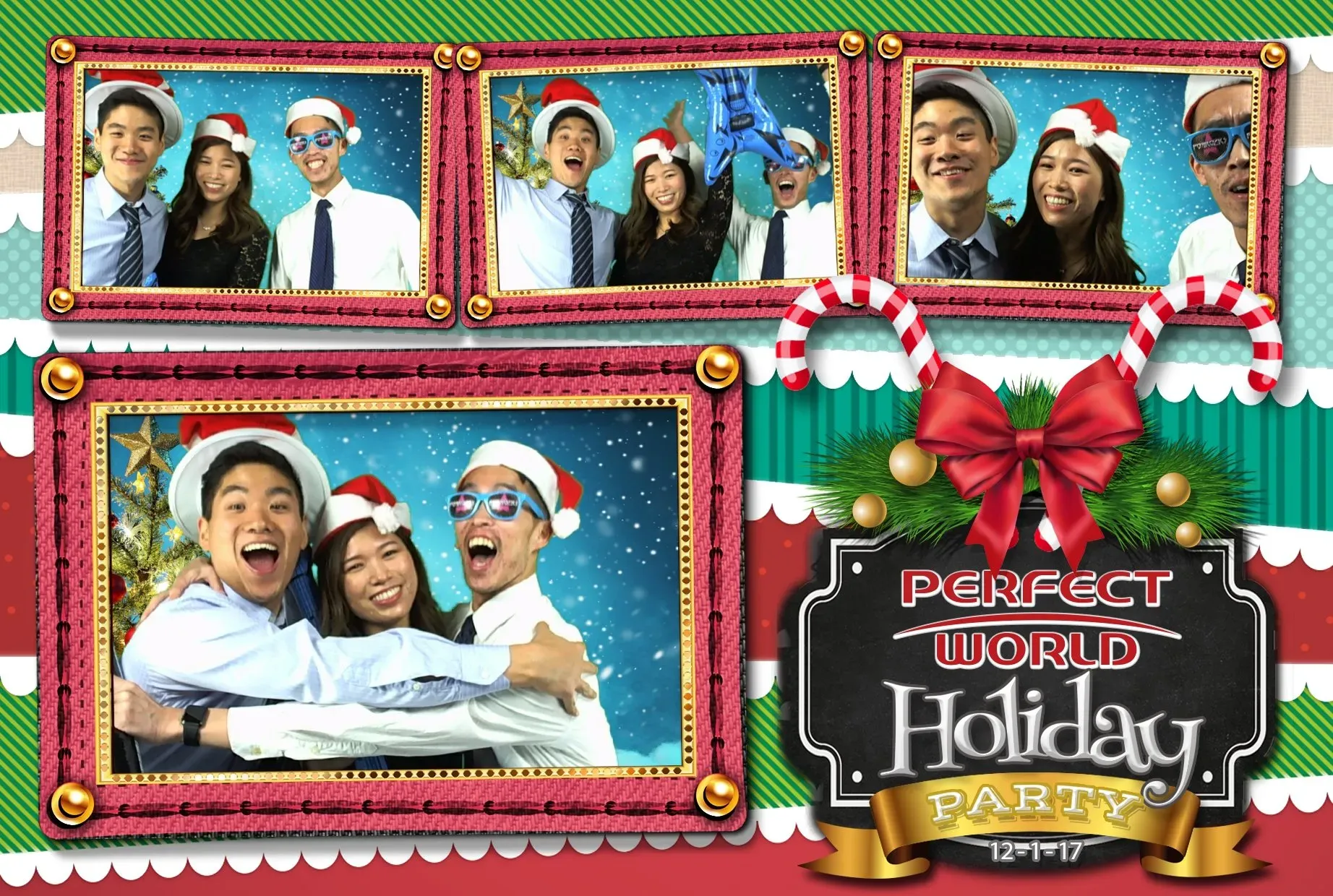
The cheapest improvement to most corporate parties is something guests do together that produces a keepsake. People will skip a speech, they will not skip a thing they can hold or send to their family. That is why a photo or video experience is a good place to put a slice of the entertainment line. Guests walk away with something, the company gets content it can use in an internal recap, and nobody has to perform. For ideas that fit a holiday room, see our Christmas photo booth ideas and the holiday party rentals page.
For market pricing on photo and video experiences in general, our photo booth rental cost guide has the numbers. We quote holiday parties individually because date, location and crew all change the price, and travel is built into the quote with no separate line items.
Want a real number for your date? Tell us the date, the city, the venue if you have one, and roughly how many guests. We will tell you what fits and what does not.
Frequently Asked Questions
There is no single right number, because it depends on the city, the venue, and whether you serve a full dinner and open bar. The reliable method is to get a per-head figure from finance, multiply it by confirmed headcount, and add a contingency of about 10 percent for late guests and fees that were not in the first quote.
Most parties land at roughly 10 to 20 percent of the total for entertainment and activities. Parties that spend toward the top of that range tend to give guests something to do together and something to take home, which is what people remember afterward.
As early as you can once the date and room are set. December Fridays and Saturdays are the first dates to go, and the first two weeks of December are the busiest. For a Bay Area or Sacramento party, aim to lock entertainment in October or early November.
Service charges and taxes on food and beverage, parking and coat check, overtime for setup and teardown, and late additions to the guest list. Ask every vendor for the all-in number and keep a contingency line.
More from the Blog

What Disney, Google, and Netflix Know About Experiential Marketing
Read more →
Flipbook Photo Booth: The Ultimate Interactive Event Experience
Read more →
Why Smart Brands Turn Event Attendees Into Micro-Influencers
Read more →